Artificial Poetry
Random thoughts on translating Sanskrit poetry
Suppose that you are a poet who writes poetry in English. You publish your poem somewhere, maybe a prestigious journal accepts your submission or maybe you just post it in your substack. Anyway, if the response from one of your readers is “your poetry is artificial”, would you take it as an appreciative comment or a critical one? Except for some fringe cases, you would probably take it as criticism. Why? Because modern poetry in English is commonly supposed to be ‘natural’, it is supposed to come from the heart. To then say that someone’s poetry is ‘artificial’ is to criticize them in no uncertain terms.
Who (or what) is responsible for this? Is it romanticism? Modernists? Free Verse? Or are Instagram “poets” to blame as always? Or is English just a naturally un-poetic language?[1] Neither do I know nor do I have enough command of contemporary English poetry to be qualified to answer it. Whatever the case, it seems true enough to me (though I have no data to support it) that most contemporary poetry in English is written without strict metre.
The poetic form is obviously important in translation. It becomes especially so when the original is not contemporary. Should you just try to convey what the original literally says? But would poetry even be poetry if it was just a bland statement of facts? Surely the form has something to do with poetry being, well, poetry. For many cases however it is well nigh impossible to preserve the original form as well as to produce something that is poetic enough in translation. There may be some middle-ground, some solution to this problem. But if there is one, and I do not believe there is any single solution, it is unlikely to satisfy everyone. I will just discuss here some challenges involved in translating poetry, mostly concerned with Sanskrit but many observations would apply to Latin or Greek as well.
Register
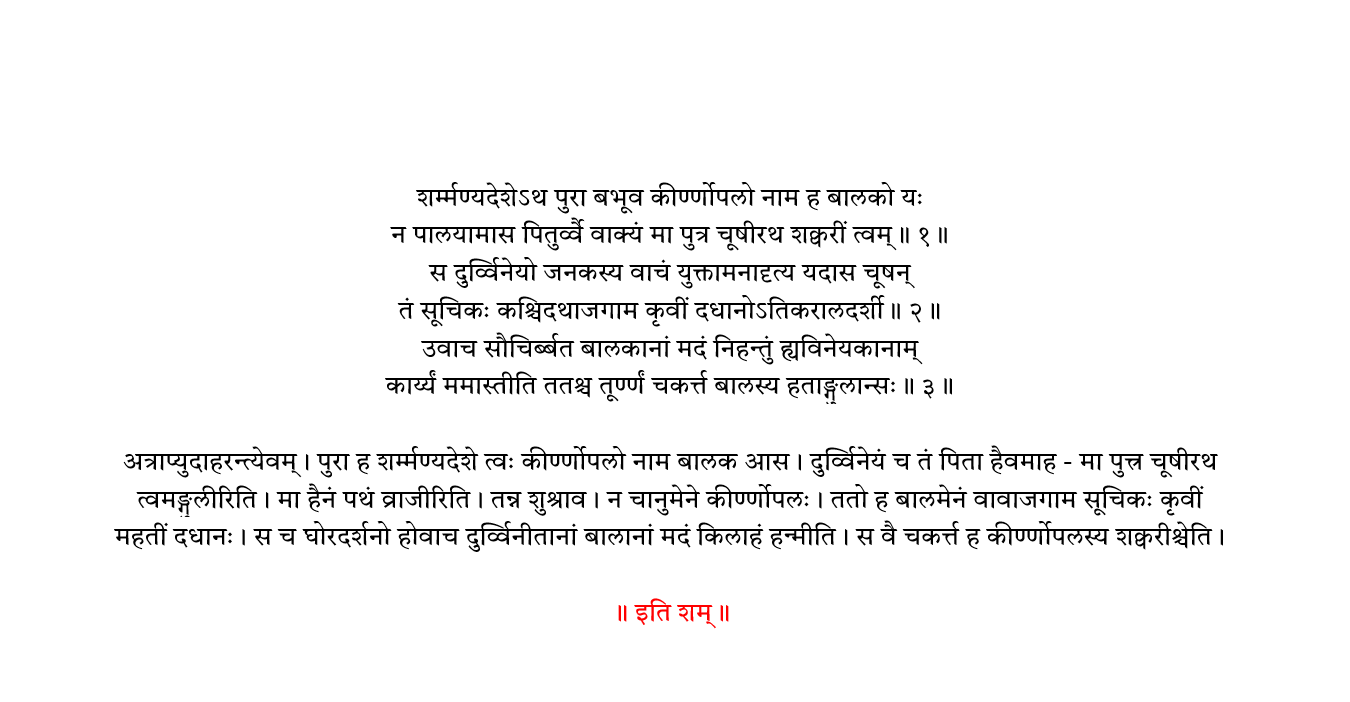
Sometimes in the seventh century, the poet Bhaṭṭi wrote an epic poem which had a double purpose: like most epics it told a traditional story but it also taught grammar and poetics. In the last canto, he writes:
vyākhyāgamyam idaṃ kāvyam utsavaḥ sudhiyām alam ।
hatā durmedhasaś cā'smin vidvatpriyatayā mayā ॥

This epic, understandable through a commentary, is a joy to the intelligent but I have slighted the stupid due to my fondness for the learned.
Bhaṭṭikāvya 22.34
This epic is then comprehensible only through a commentary and the author unambiguously insults people who don’t understand him as stupid. But even if he had not done so, it is clear that the people who could read and understand him would be a minuscule fraction of the total population. _Bhaṭṭi’_s poetry, in short, is ‘artificial’ and far from being ashamed of it, he is positively proud of it.
As Sanskrit was effectively the native language of nobody but a small minority were very strong L2 speakers, it is hard to convey the exact register in English translation. It is not the language of everyday life, so overly colloquial translations do not correspond to the original setting but neither is the language overly elevated or archaic. The Sanskrit of Bhaṭṭi is no more archaic to him than the English of BBC is archaic to non-native English speakers today.
Metre
The vast majority of Sanskrit poetry is in quantitative metre. This means that the rhythm is provided by complex but well-defined patterns of heavy and light syllables. This is different from either the stress-based metres used in English (where the rhythm is based on the patterns of stressed and unstressed syllables), alliterative metre (based on alliteration or head-rhyme) or from the so-called free verse.
Though they are generally less strict, Greek and Latin metres were based on the same general principles as those of Sanskrit. There have been attempts to mimic classical Greco-Roman metres in English (though with stress rather than syllable weight). Longfellow’s Evangeline is perhaps the most famous example of the use of dactylic hexameter in English:
This is the forest primeval. The murmuring pines and the hemlocks,
Bearded with moss, and in garments green, indistinct in the twilight,
Stand like Druids of eld, with voices sad and prophetic,
Stand like harpers hoar, with beards that rest on their bosoms.
Loud from its rocky caverns, the deep-voiced neighboring ocean
Speaks, and in accents disconsolate answers the wail of the forest.
Though it is certainly possible to write dactylic hexametres in English, as Evangeline shows, it is unwieldy and rare.
Over the course of history of the English language, metres from ancient Greece and Rome or from continental Europe were the usual ones to be imitated. The accentual metres of continental Europe, in fact, more or less nearly displaced the native English alliterative metres used in Old English and some middle English (Gawain & the Green Knight is a popular Middle English one, though with some caveats) before being resurrected to a feeble degree in modern times. In more recent times, metres from farther afield have been tried too. See, for example, the popularity of the haiku (from Japanese). Even English ghazals (from medieval Islamicate world, ultimately from Arabic) are not unknown.
Most Sanskrit metres work on the same principle as the Latin or Greek metres. On principle, then, it shouldn’t be impossible to imitate them in English. I have previously written in brief about this here where I use John Brough’s translation of a Sanskrit epigram in English while keeping the metre intact as an example. Here are both the original and the translation:
raktāśoka kṛśodari kva nu gatā
                           tyaktvānuraktaṃ  janaṃ
no dṛṣṭeti mudhaiva calayasi yad
                           vātābhibhūtaṃ śiraḥ
utkanṭhaghaṭamānaṣaṭpadaghaṭā-
                           saṃghaṭṭaghṛṣṭacchadas
tatpādāhatim antarena bhavataḥ
                           puṣpodgamo’yam kutah.


Flame-flower crimson Ashóka-tree, where has she gone?
                           Why left she this heart aflame?
No, then! Say you, you saw her not? Ah, but you lie,
                            Winds force your proud head to shake.
Bee-swarms, swarming aloft, alust, cluster in clouds,
                            Crave nectar, yet fail to swarm:
Could such bounty of blooms abound, but for her touch,
                             Thus rich to enflower your crown?
The metre here is the 19-syllabled Śārdūlavikrīḍita which has a caesura after the twelfth syllable in each line and scans as
- - - u u - u - u u u - | - - u - - u -
Even from this rare example of imitation of Sanskrit metre into English, there are some things that stand out, even in comparison to Latin and Greek metres. In hexametres or pentametres, you can usually substitute a spondee (- -) for a dactyl (- u u) but the metres in Sanskrit have all the syllables governed.
There are other problems too. Sanskrit has 8 cases and no articles. That is to say syntactic relations between words are usually, though not always, shown through the changes at the end of words. This means that the English translator has to introduce articles as well as prepositions (in, on, by, of, etc) that tend to clutter the space. To take an example, ‘forest’ in Sanskrit is vanam. If you want to say ‘in the forest’, it would be locative vane. For ‘from the forest’, it would be vanāt. Usually a single word in Sanskrit, unless it is in nominative or accusative, would need three or four words to be grammatical and meaningful in English.
This is usually not a problem as English words are generally far shorter in terms of number of syllables compared to Sanskrit ones. But there are other problems. There are, for example, metres like the popular Mandākrāntā metre scans as :
- - - - | u u u u u - | - u - - u - -
Imitating it in English would mean four stressed syllable in a row followed by five unstressed syllables in a row. Would it even be possible to have four stressed syllables followed by five unstressed ones in English? I don’t know. But even if it were theoretically possible, it would be very very difficult to produce anything halfway decent under such constraints.
Another difficulty is due to presence of large compounds in Sanskrit. For all the jokes that Anglophones like to crack at Germans for their long compound words, English uses compounds too; it’s just that the compounds generally have spaces between the components and aren’t mashed together like in the German case. In any case, Sanskrit poets used, as a matter of aesthetics, compounds that just go on and on.
To take an example, in the poem we quoted above the entirely of the third line is just a single compound word that goes on for 19 syllables:
utkanṭhaghaṭamānaṣaṭpadaghaṭāsaṃghaṭṭaghṛṣṭacchadas
which means something like:
“[Having] wings scraped by the collision of a swarming swarm of bees eagerly pressing together”
What is the translator to do with such compounds? They are not random and are a major part of the original effect of the poem but to translate into similarly long English compounds would be ridiculous, not to say unintelligible. The translator is forced to have some tradeoffs. traduttore, traditore, as the Italians say.
Nativization
The best options, in my opinion, are actually one of these two - using equivalent metres to convey similar feeling or blank verses while informing the reader of the original structure.
Metres tend to have a certain feel to them and are often, though not always, used for certain genres or themes and so on. In Greek and Latin, for example, dactylic hexametre is the metre of epic poetry. The English equivalent to this is usually considered to be rhymed iambic pentametres or heroic verse. Verse translations of Greek or Roman epics tended to be in heroic verse[2], like Dryden’s translation of the Aeneid which I am particularly fond of:
ARMS, and the Man I sing, who forc’d by Fate,
And haughty Juno‘s unrelenting Hate;
Expell’d and exil’d, left the_Trojan_ Shoar:
Long Labours, both by Sea and Land he bore
And in the doubtful War, before he won
The Latian Realm, and built the destin’d Town:
His banish’d Gods restor’d to Rites Divine,
And setl’d sure Succession in his Line:
From whence the Race of Alban Fathers come,
And the long Glories of Majestick Rome.
I don’t see why this wouldn’t work in Sanskrit translations as well. As a matter of fact nineteenth century translators often did do just that. Griffith’s translation of the Rāmāyaṇa is perhaps the best in English to date. Muir’s Metrical Translations From Sanskrit Writers is one of my favourites to turn to as it has a wide selection and is skillfully executed.
The gods no club, like herdsmen, wield
To guard the man they deign to shield :
On those to whom they grace will show
They understanding sound bestow ;
But rob of sense and insight all
Of whom their wrath decrees the fall.
These wretched men, — their minds deranged, —
See all they see distorted, changed ;
For good to them as evil looms.
And folly wisdom's form assumes.
The second is to use free verse. This seems to be the most usual options nowadays and not without reason. If it is well nigh impossible to preserve the original metre, one might as well discard any formal metrical constraint so that the image painted by the original comes through clearly at least. This is what I do though I wouldn’t dignify any of my translations as verse but rather characterize as prose divided to roughly reflect the number of original lines. I would like to translate into real verse, iambic pentametre as well as alliterative verse, but as of now I’m not capable of doing so.
Some Epigrams
That’s all. What follows are a few epigrams translated by me. If you follow me on notes here on Substack, you might have seen most of them.
ye ca mūḍhatamā loke
ye ca buddheḥ paraṃ gatāḥ ।
ta eva sukham edhante
madhyaḥ kleśena yujyate ॥

In this world, those who are most stupid
and those who have reached
the ends of wisdom are truly happy.
Midlings are all miserable
na devā daṇḍam ādāya
rakṣanti paśupālavat ।
yaṃ tu rakṣitum icchanti
buddhyā saṃvibhajanti tam ॥

The gods do not take up rods
and protect people like shepherds.
Whomever they want to protect
they endow him with intelligence.

This is the same verse as the one translated by Muir quoted above.
he dāridrya namastubhyaṃ
siddho'haṃ tvatprasādataḥ ।
paśyāmy ahaṃ jagatsarvaṃ
na māṃ paśyati kaścana ॥

O poverty, I bow down to thee
for thou have made me a magician:
I can see the whole world
but I am invisible to everyone
ete satpuruṣāḥ parārthaghaṭakāḥ svārthaṃ paritajya ye
sāmānyās tu parārthamudyamabhṛtaḥ svārthāvirodhena ye ।
te'mī mānuṣarākṣasāḥ parahitaṃ svārthāya nighnanti ye
ye tu ghnanti nirarthakaṃ parahitaṃ te ke na jānīmahe ॥

Some are good men who help others
even against their own interests.
Others are normal people who help others
if it’s not against their interests.
There are demonic ‘humans’ who destroy
others for selfish reasons.
As for those who do evil without reason,
I simply don’t know what they are.
śakyo vārayituṃ jalena hutabhuk chatreṇa sūryātapo
nāgendro niśitāṅkuśena samado daṇḍena gogardabhau ।
vyādhir bheṣajasaṅgrahaiś ca vividhair mantraprayogair viṣaṃ
sarvasyauṣadham asti śāstravihitaṃ mūrkhasya nāsty auṣadham ॥

Fire can be quenched by water
and sun’s heat by an umbrella;
Mad elephants can be controlled by sharp goads,
cattle and donkeys by lashes.
Diseases can be cured by various
medicines and poison by sorcery.
There are designated cures for everything
but there is no cure for stupid people.
vanāni dahato vahneḥ
sakhā bhavati mārutaḥ ।
sa eva dīpanāśāya
kṛśe kasyā’sti sauhṛdam ॥

The wind which had helped
the wildfire devour the forest
extinguishes a little lamp :
No one is kind to the weak.
namo vaḥ
If you like my writing, please subscribe to receive similar posts in the future. If there are any errors on my part, I would be grateful to have them pointed out in the comments. Thank you.